
The Best ofIntima & Swim Edit
The United Arab Emirates, Saudi Arabia, Qatar, Kuwait, Bahrain, and Oman… six dynamic markets united by one key trend: the emergence of a young, discerning, and digitally connected female consumer eager to invest in quality. Presenting an overview, and what it means for lingerie, swimwear, and resortwear.

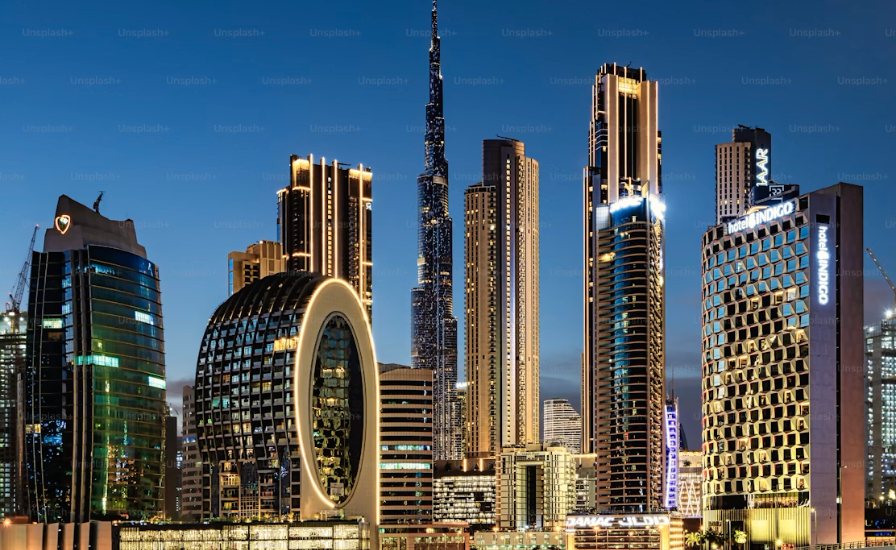
While the global luxury market faces turbulence, the Gulf is moving in the opposite direction. The GCC (Gulf Cooperation Council: the United Arab Emirates, Saudi Arabia, Qatar, Kuwait, Bahrain, and Oman) now represents one of the most dynamic premium ecosystems in the world. Defined by a young, international, digitally driven clientele with high purchasing power, the GCC is transforming lingerie and swimwear into true lifestyle categories. Between spectacular malls, ultra-fluid e-commerce, and elevated customer experience, a new premium retail hub is emerging… in the heart of the desert.
A powerful and educated female market
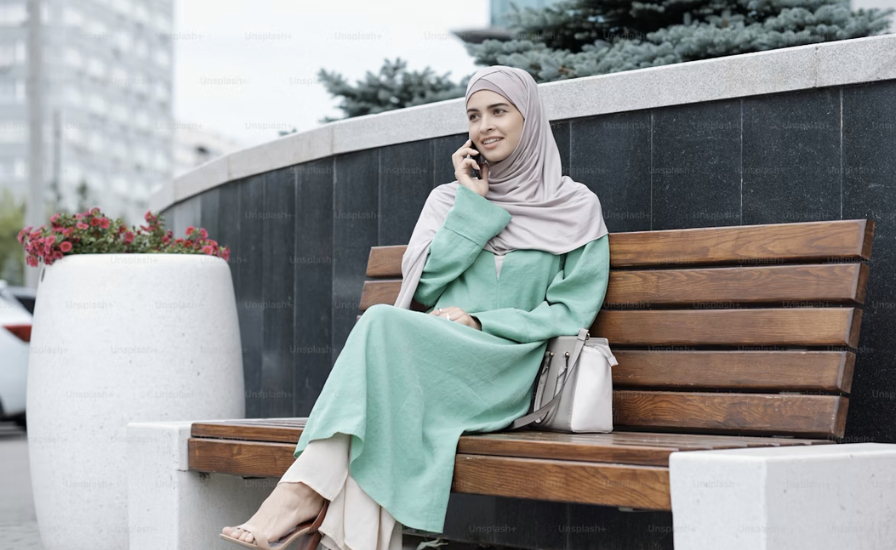
The beating heart of the Gulf market is now a young, educated, confident generation of women who make up nearly half of the GCC population, around 25 million consumers, over 55% of whom are under 35. Most live in high-consumption urban environments: Dubai, Abu Dhabi, Riyadh, Jeddah, Doha, Kuwait City, Muscat. Their level of education is remarkable: in the UAE, women represent more than 70% of university graduates and 60% of the public-sector workforce; in Saudi Arabia, they are the majority in universities and increasingly present in tech, marketing, and design fields. Many have studied in London, Paris, Boston, or Toronto, cultivating a sharp taste for quality, comfort, and personalized service. For them, lingerie is no longer simply an undergarment, but a form of self-care and personal expression, a luxury of confidence and intimacy.
This generation is also economically powerful. Their workforce participation rate reaches 35–45% depending on the country, and continues to rise. In the UAE, women own 23,000 companies, representing 10% of the non-oil GDP; in Qatar, they hold 37% of managerial roles; and in Saudi Arabia, their economic presence has doubled since 2018 thanks to Vision 2030 reforms. They generate more than 65% of regional luxury spending (Chalhoub Group, GCC Personal Luxury 2024), with average baskets up +11% in women’s fashion and +8% in accessories and personal goods. They like to spend on themselves, investing in well-being, beauty, home, self-care, and by extension lingerie.
The Cooperation Council for the Arab States of the Gulf (Arabic: مجلس التعاون لدول الخليج العربيّة), also known as the Gulf Cooperation Council (GCC), is a regional intergovernmental, political, economic, and military alliance established in Riyadh (Saudi Arabia) in 1981. It comprises Bahrain, Kuwait, Oman, Qatar, Saudi Arabia, and the United Arab Emirates (UAE).
The intimate sphere: a cherished space
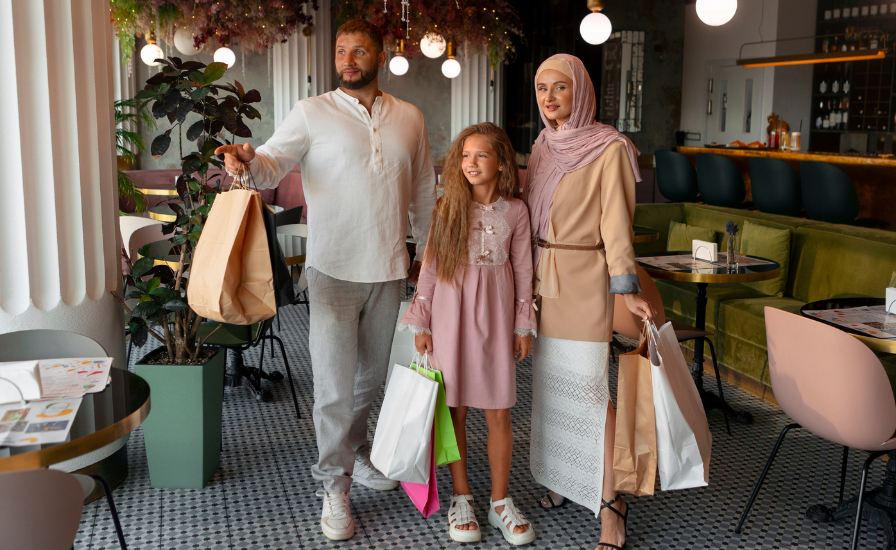
In the Gulf, the intimate sphere is neither marginal nor secondary: it is a cornerstone of daily life, a protected, valued, deeply invested space at every level. Unlike many “Western” societies, where public and social life shape recognition and consumption patterns, here the true heartbeat of lifestyle is indoors: at home, within private circles, in women-only environments. This centrality of intimacy is not a sign of withdrawal, but rather a protected place of freedom and personal affirmation. The home, often designed to be aesthetic, functional, and comfortable, is also a space for self-care, relaxation, and socializing.
It’s where women host friends, relax and reconnect with themselves. While dress codes may be more regulated outdoors, freedom flourishes indoors, with a sophistication that often goes unnoticed from the outside. Loungewear, fragrances, interior décor: everything carries meaning, everything contributes to a shared aesthetic of well-being. This trend is also visible in retail, with the rise of VIP fitting rooms, private spaces, and personal-shopper services dedicated exclusively to lingerie. Products are no longer treated as accessories, but as core elements of the feminine wardrobe.
Growth drivers
Several factors are fueling growth in the GCC. Governments are investing to make retail more attractive., especially in Saudi Arabia and the UAE. Premium mall openings are multiplying, giving brands spectacular settings. Spending is also rising thanks to consumer confidence, high disposable income, and high-end tourism, which remains a major growth engine. Even in a volatile geopolitical environment, the influx of affluent travelers sustains the market, with a notable share from European and Asian visitors, and a particularly strong contribution from Russian consumers, who represent the highest share of luxury tourist spending.
According to Chalhoub Group’s GCC Personal Luxury 2024 report, the personal luxury market reached USD 12.8 billion in 2024, growing +6% at a time when global luxury is declining. The first quarter of 2025 accelerated even further, with +11% growth in fashion and +23% in prestige beauty, boosted by Ramadan festivities, newly opened stores, and increasingly active local consumers. Add to this the rise of e-commerce: online sales now account for 13% of luxury in the region, still below global averages, but growing at an exceptional pace.

A highly concentrated distribution structure
Unlike Europe, where lingerie and swimwear rely on a network of independent multi-brand boutiques, the GCC market is structured around a handful of conglomerates that own or operate licensed brand portfolios. This concentration stems from the local economic model, shaped by franchising, family ownership, and heavy investment in malls.
In lingerie and swimwear, major regional players dominate the market:
Alshaya Group (Kuwait) distributes Victoria’s Secret, Aerie, Bath & Body Works, and H&M across the GCC.
Apparel Group (UAE) manages La Vie en Rose, R&B, Aldo, Dune, Charles & Keith, and spans most countries.
Chalhoub Group (Dubai) operates luxury and premium banners like Bloomingdale’s and Tryano, distributing Chantelle, Simone Pérèle, and Wacoal.
Al Tayer Group (UAE, KSA, Qatar) focuses on the upper premium segment with franchises such as Bloomingdale’s, Ounass, and Harvey Nichols.
Landmark Group leads accessible fashion via Centrepoint, Splash, and Max.
Jamjoom Fashion (Saudi Arabia) owns Nayomi, the leading regional lingerie and homewear brand.
This structure ensures service consistency but limits operator diversity. For foreign brands, this represents both a barrier and a shortcut: one agreement can open several national markets simultaneously.
Retail spaces like nowhere else
In the Gulf area, shopping is an experience, a ritual, a social moment. The place of purchase, more than the product itself, reflects a refined, discreet way of living luxury, supported by unparalleled service standards.
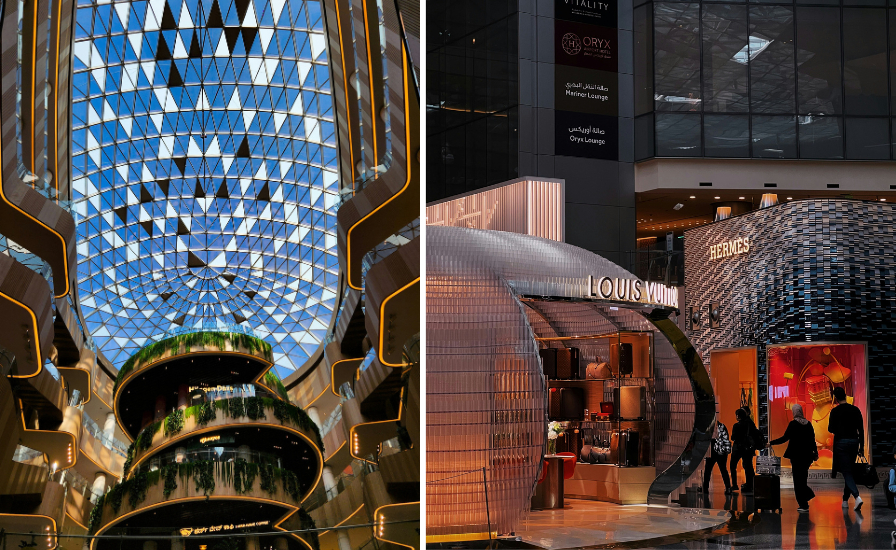
In the UAE, Qatar, and Saudi Arabia, malls are true living spaces where women spend hours shopping, enjoying coffee, trying on pieces, and relaxing in ultra-modern environments offering complete discretion. Large mono-brand franchises dominate the accessible and mid-premium segments: Victoria’s Secret, Aerie, Etam, Oysho, La Vie en Rose.
The market’s second pillar consists of selective multi-brand stores, where lingerie meets ready-to-wear and accessories. At Bloomingdale’s (Dubai, Kuwait), Galeries Lafayette (Dubai, Riyadh), or Tryano (Abu Dhabi), shoppers find curated European brands: Chantelle, Simone Pérèle, Wacoal, Hanro, La Perla, as well as resortwear labels like Eres or Zimmermann.
At Dubai Mall, Place Vendôme Doha, or Riyadh Park Mall, fitting becomes an experience in itself, often handled by staff trained in Europe. In a culture where the private sphere plays a central role, these spaces offer the intimacy customers value as much as the product quality.

An omnichannel, hyper-engaging market
Digital growth is explosive. Ounass (Al Tayer Group) reportedly captures nearly 80% of the high-end e-commerce market, with an average basket above USD 500, and more than three million active customers (The Meridio). Other players such as Bloomingdale’s.ae, Namshi, or 6thStreet now offer a digital experience equivalent to physical retail: express delivery, refined packaging, free returns, bilingual Arabic/English content.
AI use in shopping journeys is accelerating: automated recommendations, virtual try-ons, climate-based selections, and occasion-driven suggestions (spa, villa, wedding). Digital is becoming sensory, intuitive, conversational; the line between physical and digital retail is dissolving in favor of an integrated omnichannel luxury experience.
This new generation of shoppers is loyal, if the brand delivers on its promises: quality, aesthetics, comfort, technology, fresh collections, strong storytelling, and service. They buy both online - over 80% make at least one digital purchase per month -and in store, expecting a consistent, human and high-level experience every time.
Resorts: the new stage for swimwear
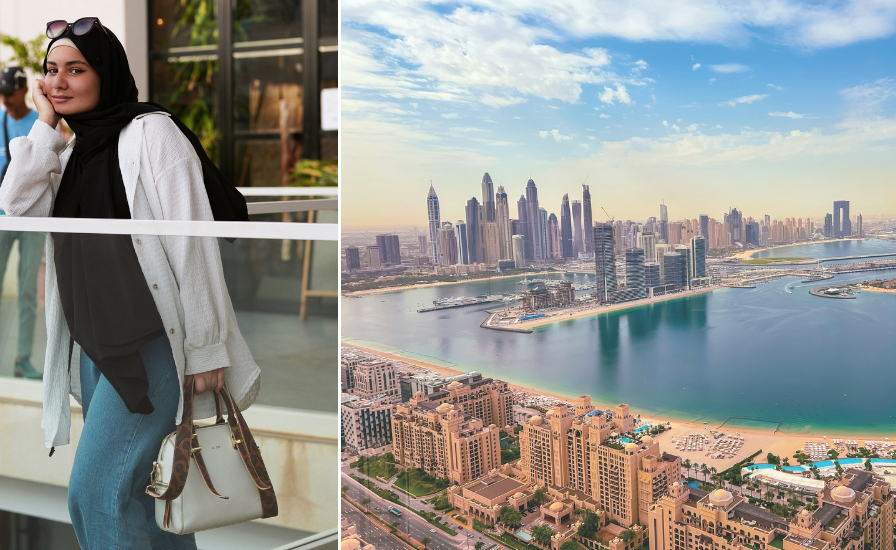
Premium beach lifestyle discovers unmatched growth opportunities in the Gulf: a warm climate, prestigious resorts, private beaches, five-star hotels, yachts, pool culture, and international tourism. More than 650 hotel projects were under construction across MENA in 2024, representing 161,000 additional rooms (source: Gulf Business). Flagship projects such as The Red Sea or Amaala in Saudi Arabia illustrate this upscale shift, opening new opportunities for premium retail.
Consumer Style Preferences
The Gulf is a global crossroads - West, Asia, North Africa, and the Gulf itself. Women who live there differ widely in origins, motivations, and style references. But one common thread emerges: they are exposed to international standards, which local consumers adopt and reinterpret according to their needs.
Lingerie
Premium lingerie appeals here for its structured elegance and supportive design. Customers look for full-coverage bras, invisible styles suitable under abayas, lightweight underwires or second-skin bralettes, and breathable materials suited to the warm climate. Minimal or sheer cuts perform less well than sculpting silhouettes crafted in stretch lace, satin microfiber, or lined tulle. The color palette remains classic: ivory, blush, nude, champagne, deep black. But pastel or metallic tones (rose gold, light gold, emerald, plum) are gaining ground. Coordinated sets (bra + matching brief) remain a safe, highly valued choice.
Knitwear
In a hot-climate region, knitwear becomes a functional and aesthetic second skin, suited to both indoor air-conditioning and mild evenings. Consumers seek fine, breathable knits with silky hand-feel (mercerized cotton, viscose, silk blends). Cardigans, tunics, and knit dresses are popular, often layered over more fitted pieces. Italian and French brands, known for high-quality yarns and craftsmanship, enjoy strong loyalty.
Nightwear & Loungewear
Gone are the oversized, ornate pieces. Today’s consumers value fluid fabrics (satin, silk, modal, combed cotton) and refined details: lace inlays, gold piping, mother-of-pearl buttons. Loungewear unfolds in an array of long dresses and pant–tunic sets, often paired with lightweight robes.
Swimwear & Resortwear
The resort culture, omnipresent in Dubai, Doha, and Muscat, has shaped a distinctive beach aesthetic: more couture than sporty, more styled than revealing.
Premium swimwear thrives in two formats:
sculpting, streamlined one-pieces in sophisticated colors
“modest swimwear” sets (leggings, tops, matching caps) in high-end technical fabrics
Gulf consumers love coordinating swimwear with resortwear pieces: kaftans, oversized shirts, fluid pants, chiffon dresses, woven baskets, gold sandals. European houses like Eres, Zimmermann, Missoni Mare, Melissa Odabash, and Vilebrequin coexist with local labels focusing on “modest luxury.”

A mosaic of markets to capture
Each GCC country has its own profile. In the UAE, Dubai attracts an international, demanding clientele, while Abu Dhabi prizes ultra-premium service. In Saudi Arabia, change is happening at lightning speed: Vision 2030 is driving massive urbanization, new malls, and growing domestic tourism. Qatar is smaller but extremely high-end, seeking exclusivity. Kuwait maintains a strong fashion-driven culture; consumers there are true trendsetters. Bahrain and Oman are quieter but financially solid, relying more on e-commerce than physical retail.
Regionally, this diversity is an asset: each of the six nations offers an entry point, a testing ground, a test-and-learn opportunity for brands ready to adapt. Entering the Gulf means navigating real constraints: high mall rents, licensing requirements, stock planning, the need for a local partner. Yet the levers are powerful. The mobile phone is an extension of the consumer’s wardrobe. Loyalty is built through experience, not only product. The Meridio report emphasizes that client relationships go beyond transaction: they must be human, personalized, immersive, with access to private clubs, VIP events, and digital conciergeries that help brands anticipate consumer needs.
GCC: the power of premium in numbers
USD 12.8 billion: personal luxury market value in 2024
+6% growth while global luxury declines
+11% premium fashion growth in Q1 2025
+23% prestige beauty growth in the same period
43%: fashion’s share of GCC luxury, category #1
+17% surge in skincare, the strongest beauty increase
13% of luxury sales now online (digital growing faster than in the West)
16% of luxury tourist spending comes from Russian customers
USD 15 billion: projected market value by 2027
8 new premium malls in development in KSA and UAE
(Sources : Chalhoub Group – GCC Personal Luxury 2024)



Related articles:



Copyright 2026. All right reserved - Terms