
The Best ofIntima & Swim Edit
Cotton Desire
As lingerie continues its shift toward greater transparency, improved lightness, and sensory comfort, cotton is gradually reclaiming a place many thought it had lost.
Long associated with basic lingerie, this material is now returning to the spotlight, no longer as a purely functional ption, but as a meaningful, almost manifesto-like choice, expressing a renewed relationship with the body and with clothing.

Style offices advocate a return to natural materials
In its Life & Style reports, Nelly Rodi highlights a growing desire for so-called “real” materials: sensory fabrics that foster a more intimate connection with clothing and reflect a need to reconnect with the body and with emotion. This trend values authentic fibers that speak as much to touch as to sensibility, with cotton holding a privileged position among them.
At the same time, Peclers Paris observes the rising importance of plant-based textiles, linen, hemp, or regenerated cotton, described as the key materials of a more responsible and more hedonistic fashion, where tactility and restraint (sobrieté) become aesthetic arguments that are just as decisive as sustainability. WGSN, for its part, notes that the search for quality, traceability, and softness is driving a renewed focus on fibers perceived as reassuring, reconciling everyday comfort with environmental commitment. Across all style offices, the message is clear: natural materials are no longer a passing trend, but part of a deep-rooted movement encouraging brands to restore cotton to a strategic role in their collections.
A reassuring fabric
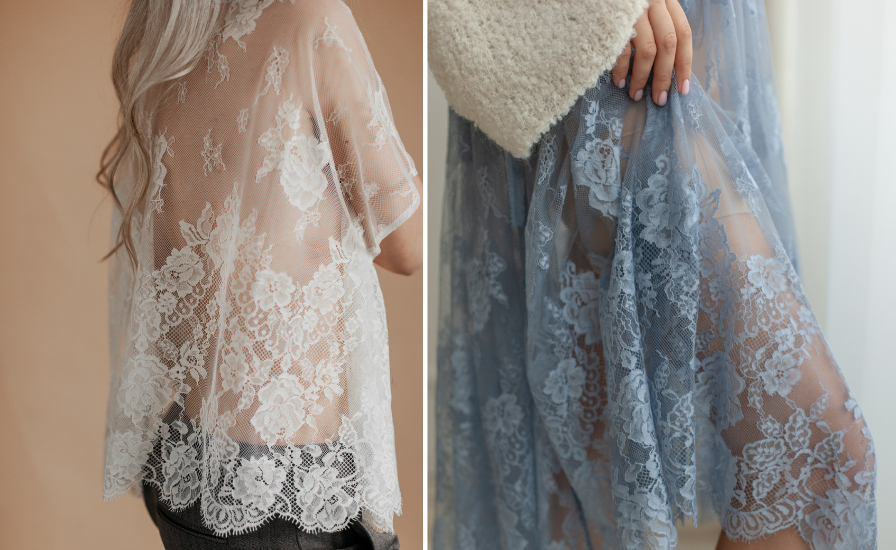
Several emblematic brands have embraced this shift and chosen to give cotton a clear, visible presence in their collections. With its Joy line, Louisa Bracq has for the first time introduced cotton, working the fiber through botanical embroidery and a trim inspired by artisanal gestures, remaining true to the brand’s aesthetic while adopting a more natural register. With Romie, Sans Complexe delivers a more accessible, everyday vision of organic cotton, seamlessly woven into the brand’s signature corsetry silhouettes and refreshed with decorative elastics and feminine detailing. Anita, through the Lia line, pairs a comfort cotton with sheer lace, playing on the contrast between naturality and contemporary sensuality. Chantelle, meanwhile, points out that cotton remains very present in its ready-to-wear collections, while also emphasizing the environmental limits of conventional cotton and favoring certified fibers or cellulosic alternatives such as Modal or Lyocell. Maison Lejaby has also echoed this stance, opting for Tencel in its Softness line to ensure greater structural stability.

A fiber that speaks to the skin
Cotton’s strong appeal also lies in the privileged relationship it has with the skin, as its natural characteristics and behavior meet physiological needs that few fibers can satisfy. Hydrophilic by nature, cotton absorbs moisture and helps maintain a dry feel, limiting friction and heat buildup in particularly stressed areas such as bra bands.
This absorbency contributes to skin comfort, especially as temperatures rise or when the body is in motion. The internal structure of the fiber also creates a thin layer of air that supports a form of thermal regulation. Cotton follows the body’s temperature rather than trapping it, reinforcing the sense of natural breathability often cited by consumers. Added to this is its intrinsic softness: the fiber’s flat, flexible cross-section presents a smooth, non-abrasive surface that reduces friction against the skin. This helps preserve cutaneous comfort and lowers the risk of irritation, even with prolonged wear. Furthermore, its cellulosic nature, chemically neutral and free of allergenic proteins, makes it particularly well tolerated by sensitive skin.
A material that feeds storytelling
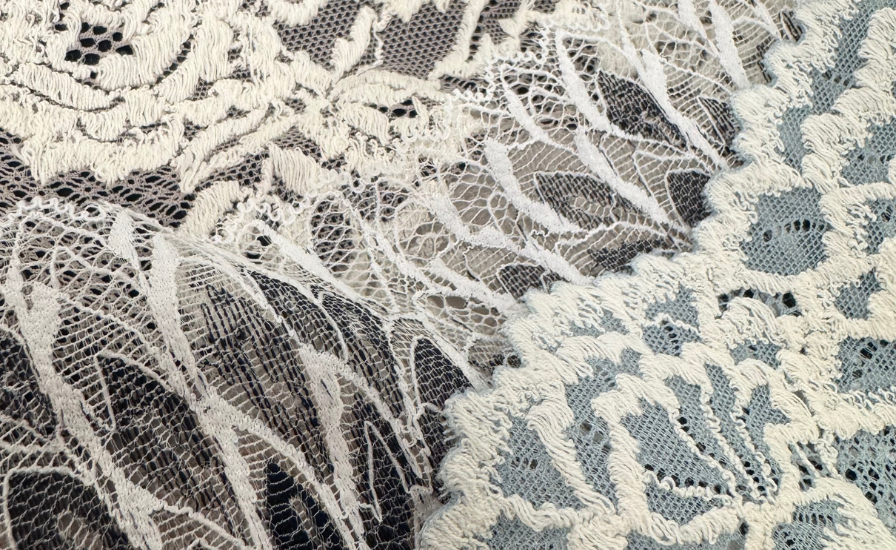
Today, cotton is no longer synonymous with everyday basics; it has become a powerful storytelling vehicle. Brands and suppliers alike use it to build narratives of heritage and craftsmanship, in which the fabric carries meaning as well as value. Chanty Lace, for instance, has made cotton one of the pillars of its identity: its laces containing up to 69% cotton claim a form of discreet luxury based on authenticity, stability, and longevity. The promise of lace that does not shrink, lose shape, or lose softness after repeated washing reinforces a message of lasting quality. Sivalace stands out for taking a creative, narrative approach, revisiting the codes of historical merletti through collections in which cotton is expressed in vintage-inspired borders and allovers. Color palettes range from natural tones to sorbet shades, from ecru to powder pink, from soft sky blue to more vibrant hues.
True to its Swiss heritage, Interspitzen translates the reliefs and lines of Alpine landscapes into exclusive embroideries developed for Calida’s Cotton Desire anniversary capsule, where the fiber is both expressive and deeply comfortable.
Through these varied interpretations, cotton becomes an material conferring identity, giving products a depth that customers instinctively perceive: that of a fiber with a history, an origin, and an imagination.

When the fiber meets the demands of corsetry
This renewed popularity should not obscure a more rigorous reality: cotton remains a challenging fiber when it comes to structured corsetry. Its low elasticity, moisture absorption, and tendency to relax under tension complicate the construction of cups designed to provide long-lasting support, particularly for deep cups or larger sizes. Industry players acknowledge this openly: when mechanical performance is central, cotton quickly shows its limits.
Iluna, a lace specialist, notes that cotton is difficult to adapt to jacquard or Raschel structures. To achieve truly functional corsetry laces, mixed compositions are often required, and while cotton is used it is blended with more technical fibers.
Tessitura Colombo shares this view: in corsetry, cotton almost always needs to be combined with an elastomer to ensure support, stability, and comfort in wear. This technical reality does not undermine the fiber but clearly defines its field of application. Introduced around five years ago, the category of cotton laces, both elastic and rigid,is now an integral part of Tessitura Colombo’s collection and continues to be enriched with new stylistic proposals.
The industrial response: reinvented cotton
In response to these constraints, the fabrics industry is developing hybrid solutions designed to reconcile naturality and performance. Brugnoli is opening a particularly compelling path with Explosive Cotton Plus, a cotton transformed using technology borrowed from technical fabrics. The fiber gains elastic recovery, stability, and precision, making it suitable for more demanding silhouettes or even sport- and yoga-inspired uses. In this way cotton moves beyond comfort alone and toward performance.Eusebio, a cotton specialist and owner of cotton plantations in the Ivory Coast, adopts a different strategy based on the nobility of blends. By combining cotton with fibers such as cashmere or silk, the manufacturer develops jerseys, interlocks, and terry fabrics for luxury loungewear and homewear. These fabrics, originating in the world of lingerie, are gradually shifting to include indoor garments worn as true clothing, where cotton becomes synonymous with high-end softness.Within this dynamic of a reinvented cotton, some houses are exploring the fiber not only as concerns the issue of performance but also as envisioning it as a a fully-fledged creative lever. At Iluna, cotton has broken free from its traditional, organic image to become an aesthetic language in its own right. Worked in natural and off-white tones, it unfolds over colored grounds, revealing Greek-key and garland motifs, before reinventing itself in micro geometric designs and millerighe (narrow stripes) effects that generate a novel textile look far removed from traditional lace codes. This approach reflects a broader ambition to evolve cotton’s expression, detaching it from a purely functional image and revealing its graphic and visual potential. In the same spirit, for SS27 Iluna is developing a range of flocked laces with over 50% cotton content, reinforcing material value, aesthetic coherence, and product distinctiveness.Through the craftsmanship of Brugnoli, Eusebio, Iluna, Chanty, Sivalace, Tessitura Colombo, and Interspitzen, cotton is being reinterpreted across a full spectrum of innovation: a fiber capable of taking on technical, heritage, luxury, or creative forms, depending on the brand universe.
Cottons of the World: A Palette of Possibilities
The richness of cotton is also expressed through its diversity. Not all cottons are the same, and manufacturers are increasingly drawing on this wide palette. Upland cotton, which accounts for the majority of global production, forms the backbone of a robust, accessible offering and is widely used for basic underwear and household linens. At the other end of the spectrum, extra-long staple cottons such as Pima and Supima, or the very rare Sea Island cotton, embody a form of textile luxury built on silky softness, natural luster, and superior durability. Egyptian cotton, with its fine yet strong fiber, remains a benchmark for high-end bedding and lingerie.At the same time, indigenous cottons are introducing another narrative, one more closely aligned with slow fashion. In India, varieties such as Kala or Kapas, often grown without intensive irrigation and sometimes in polyculture, make it possible to envision fabrics with a very low water footprint, more closely tied to artisanal logics than to large-scale industry. Phuti Karpas refers back to the history of Dhaka muslin, the legendary fabric made from extremely fine fibers, now being revived through textile preservation projects. Added to these families are organic cotton, governed by certifications such as GOTS, and recycled cotton, derived from post-industrial or post-consumer waste, which responds to the expectations of a more circular fashion system. For lingerie, this diversity represents a true reservoir of storytelling and positioning, where each type of cotton can become a marker of price point, value, or style.
Between the desire for naturality and performance requirements
The future of corsetry and lingerie will likely not be defined by a simple opposition between cotton and synthetics, but by a more nuanced articulation involving these two worlds. An enriched, transformed, blended, and technologically reimagined cotton, one that still preserves what makes it fundamentally strong: a near-instinctive intimacy with the skin and a sense of naturalness that continues to captivate consumers. Back at the center of the stage, cotton does not represent a step backward, but rather a fiber going through reinvention, at the crossroads of textile innovation and the growing desire to reconnect lingerie with simpler, more authentic sensations.
Lab-Grown Cotton
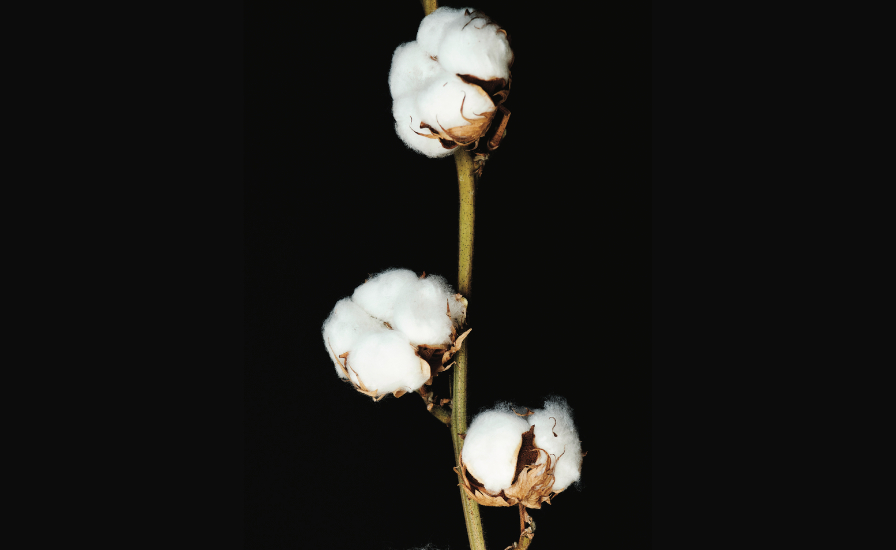
Founded in 2019 in Boston, U.S.-based climate tech company Galy is developing cotton produced through cellular agriculture, grown in laboratories from cotton plant cells. This technology makes it possible to create a fiber with properties which are equivalent to those of conventional cotton, while drastically reducing its environmental impact: up to 99% less water use, 97% less agricultural land required, and a significant reduction in CO₂ emissions. Still in the pre-industrial scaling phase, this upstream innovation paves the way for more stable, fully traceable cotton production that is better equipped to face climate-related challenges.
Naturally Colored Cottons
Naturally colored cottons are fibers whose color is inherent to the plant as it grows, without the use of dyeing processes. Their palette unfolds in soft, organic shades, ecru, beige, brown, chocolate, or khaki green, with slight variations from one harvest to another that are an integral part of their identity. This deliberately limited color range becomes an aesthetic marker in its own right, expressing visible naturality and a sense of restraint that is particularly sought after in the worlds of comfort, intimates, and homewear.



Related articles:



Copyright 2026. All right reserved - Terms